Assi Ghat
The southern boundary of sacred Varanasi — where the Assi River meets the Ganges, pilgrims complete the holy Panchkroshi circuit, and every sunrise brings a gathering of sadhus, students, and souls.
Location
Southern Varanasi
Best Time
Sunrise — 5 to 7 AM
Yoga
Daily at Dawn
Entry
Free
Vibe
Peaceful & Spiritual
The Sacred Story
Where the Sword of the Goddess Fell
Assi Ghat marks the southernmost boundary of sacred Varanasi — the ancient city of Kashi. The name Assi comes from the river Assi, a small tributary of the Ganges, whose confluence with the Ganga at this point creates a sacred sangam — a meeting of waters that Hindus consider especially holy and purifying.
According to the Puranas, the goddess Durga threw her sword — her "asi" — into the water after slaying the demons Shumbha and Nishumbha. Where the sword fell, the Assi River was born. This divine origin gives Assi Ghat a special significance among all the ghats of Varanasi — it is both the end point and the beginning point of the sacred boundary of Kashi.
"The Panchkroshi Yatra — the 55-kilometre pilgrimage that circumambulates the sacred city — begins and ends at Assi Ghat. To complete this journey is to walk the boundary of Shiva's own city. Every step is considered a prayer."
Compared to the crowded central ghats, Assi has always had a different character — quieter, more contemplative, yet deeply alive. It has long been a gathering place for scholars, poets, and seekers. The great Hindi poet Tulsidas, who wrote the Ramcharitmanas in the 16th century, is said to have spent time near Assi Ghat. The Banaras Hindu University — one of Asia's largest universities — is located nearby, and the ghat has attracted generations of students, artists, and intellectuals alongside its pilgrims and sadhus.
Gallery
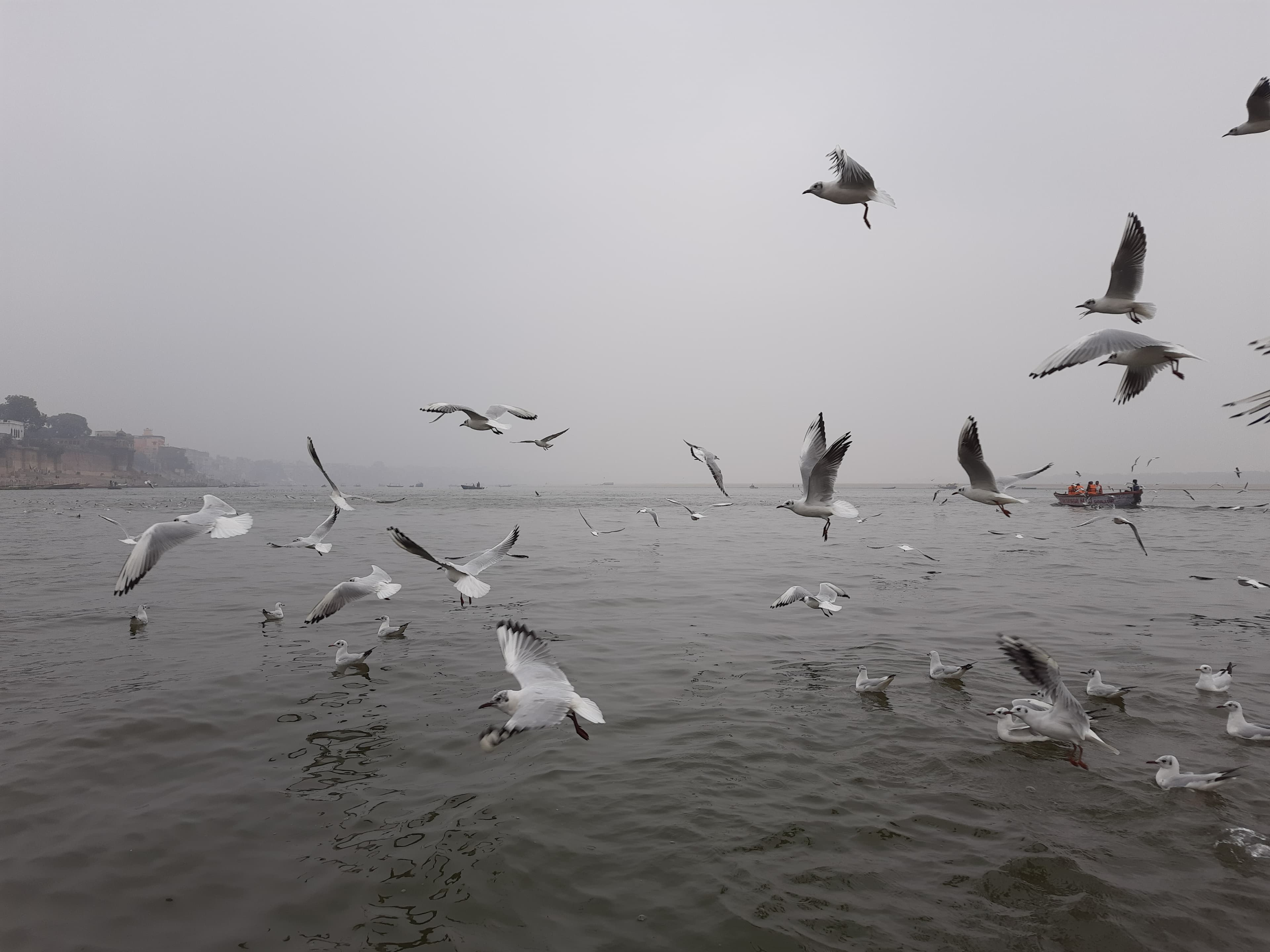
Assi Ghat at Dawn
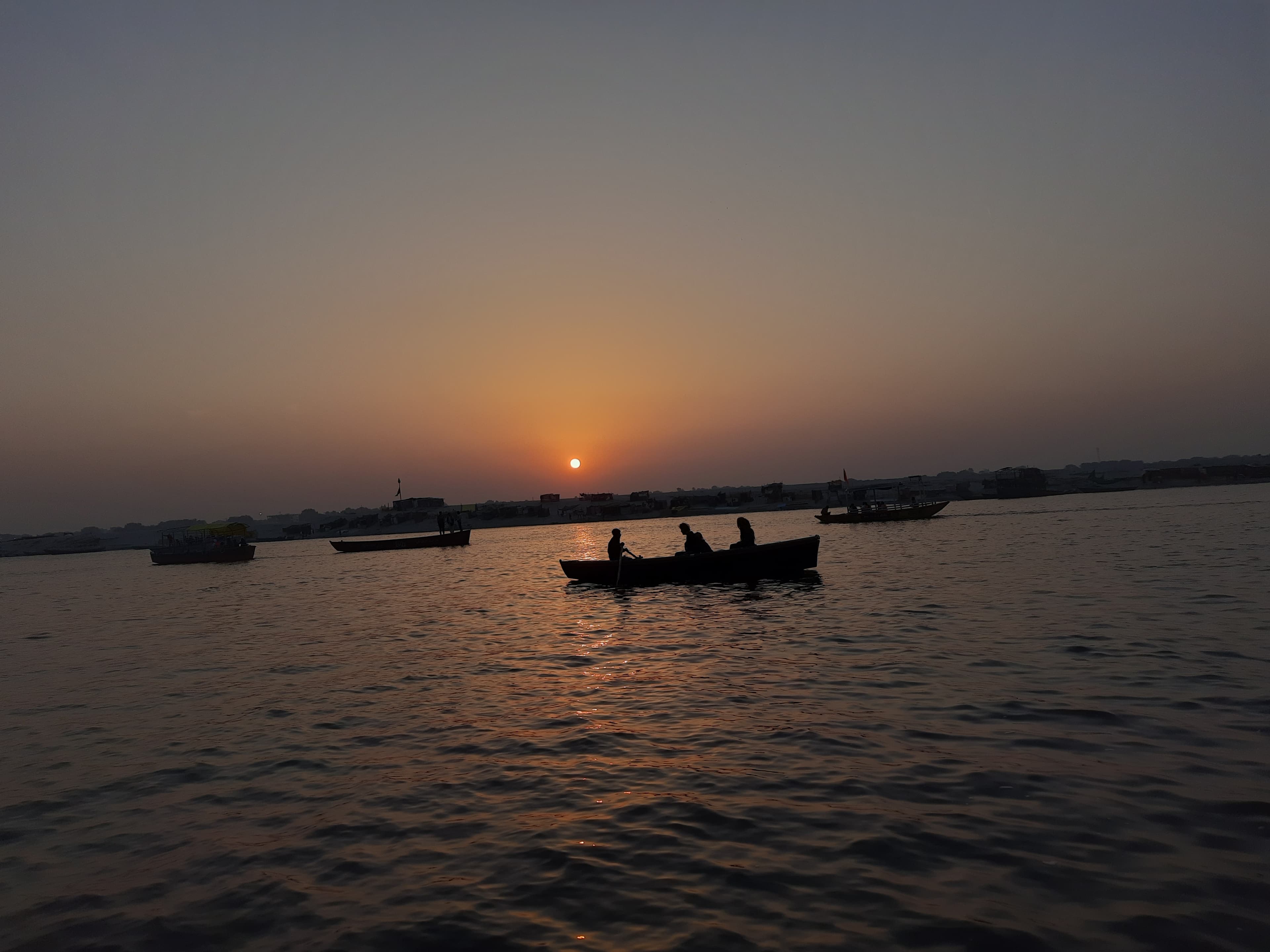
Morning Life
Dawn at Assi — The Quieter Side of Varanasi
The experience of Assi Ghat at sunrise is unlike anything at the central ghats. There are no massive crowds, no loud tourist boats. Instead, the ghat fills gradually with a quiet gathering — sadhus performing puja under the peepal trees, yoga practitioners stretching on the stone steps as the first light touches the river, pilgrims completing morning bathing rituals, and local residents walking along the riverbank with their chai.
Sunrise Yoga
Every morning, yoga teachers hold free and open classes on the ghat steps as the sun rises over the Ganges. Visitors are welcome to join. No booking required — simply arrive before sunrise.
Shiva Puja at Dawn
The large Shivalinga at Assi Ghat receives daily morning puja. Watching priests perform these ancient rituals in the early light, with the river behind them, is a deeply moving experience.
Sacred Sangam Bathing
Pilgrims believe bathing at the confluence of the Assi and Ganga rivers at this ghat has special purifying power — particularly on auspicious days like Makar Sankranti and Kartik Purnima.
Scholar's Ghat
Assi has long drawn writers, poets, and thinkers. Mark Twain visited Varanasi in the 19th century and was transformed by what he saw near the ghats. The intellectual tradition continues today.
Evening Gathering
As evening falls, Assi Ghat fills with musicians, storytellers, and locals gathering for the smaller aarti ceremony and the gentle sounds of the river at dusk.
The Panchkroshi Yatra
The Great Pilgrimage That Begins Here
Assi Ghat is the starting and ending point of the Panchkroshi Yatra — one of the most important pilgrimages in Hinduism. This 55-kilometre circuit walk circumambulates the sacred city of Kashi, passing through five major cremation grounds and 108 shrines along the route. Pilgrims who complete this walk are believed to receive the merit of visiting every sacred site in the entire city in a single journey.
The journey typically takes five days, with pilgrims camping overnight at specific staging points along the route. The walk is done barefoot by devout pilgrims. It is one of the oldest pilgrimage traditions in Varanasi, described in texts dating back over a thousand years, and it continues today exactly as it always has.