Dashashwamedh Ghat
The most sacred ghat in Varanasi — where the Ganges, fire, and devotion meet every evening in one of the world's most breathtaking rituals.
Location
Central Varanasi
Best Time
Sunrise & Sunset
Aarti Time
Daily at Dusk
Entry
Free
Crowd Level
High
The Sacred Story
Where Lord Brahma Welcomed Lord Shiva
Dashashwamedh Ghat is the oldest and most vibrant ghat in Varanasi, stretching along the western bank of the sacred River Ganges. Its name carries within it an ancient cosmic act — "Dasha" means ten, "Ashwa" means horse, and "Medha" means sacrifice. According to the Puranas, Lord Brahma performed the Dashashwamedha Yajna here — the sacrifice of ten horses — to welcome Lord Shiva back to Kashi after Shiva had left the city in anger.
This single act consecrated Dashashwamedh as the most sacred spot along the entire length of the Ganges. Hindus believe that bathing here during auspicious occasions earns the merit of performing ten horse sacrifices — one of the highest acts of devotion in ancient Vedic tradition. For over 3,000 years, this belief has drawn pilgrims from every corner of India and beyond.
"Kashi is the city of Lord Shiva. The Ganges is Shiva's grace. And Dashashwamedh is the point where that grace touches the earth. To stand here at dawn is to stand at the beginning of the world."
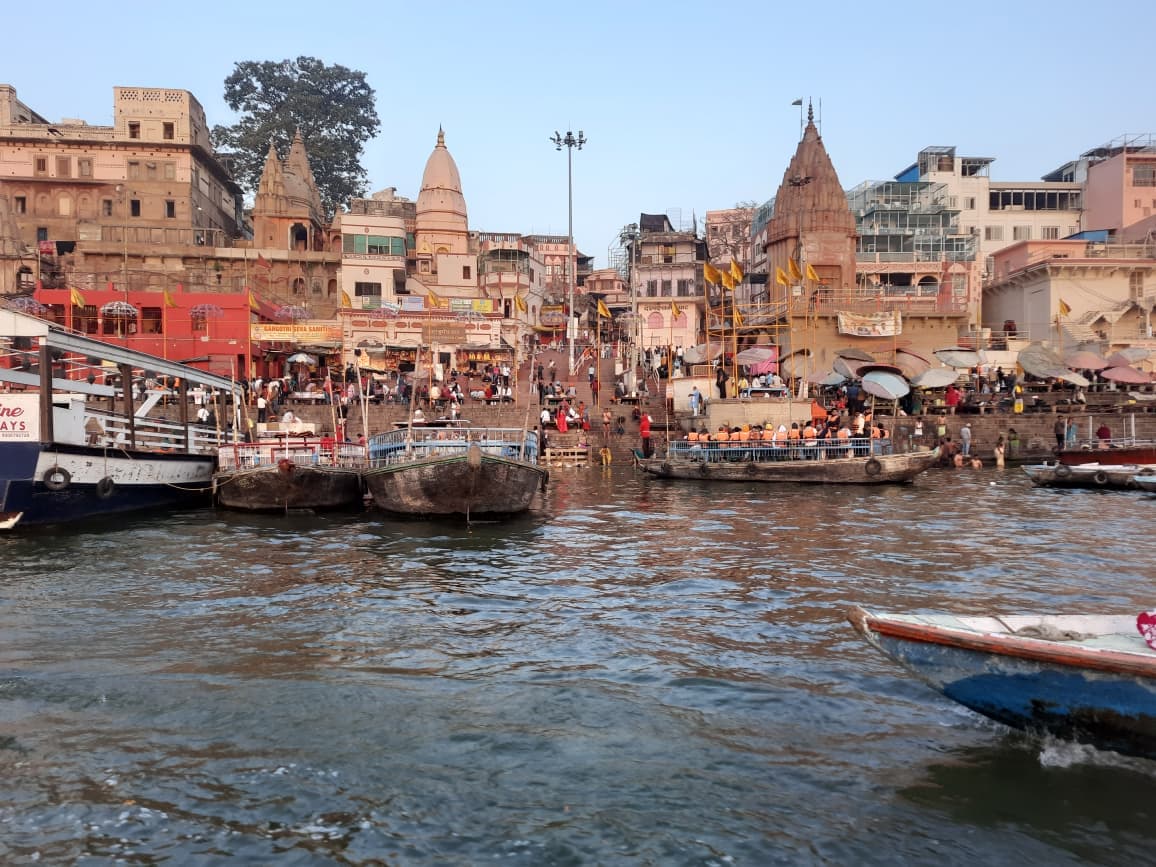
Today, Dashashwamedh is the spiritual heartbeat of Varanasi. Every morning, long before the city wakes, priests begin the ritual bathing ceremonies on the steps. Flower sellers, chai wallahs, silk merchants, and sadhus fill the lanes leading to the ghat. Boats crowd the river. And every evening, as the sky turns orange and gold, the famous Ganga Aarti transforms the entire waterfront into something that cannot be described — only witnessed.
Gallery
Dashashwamedh Through the Day
The Ceremony
Ganga Aarti — Fire, Devotion, and the River
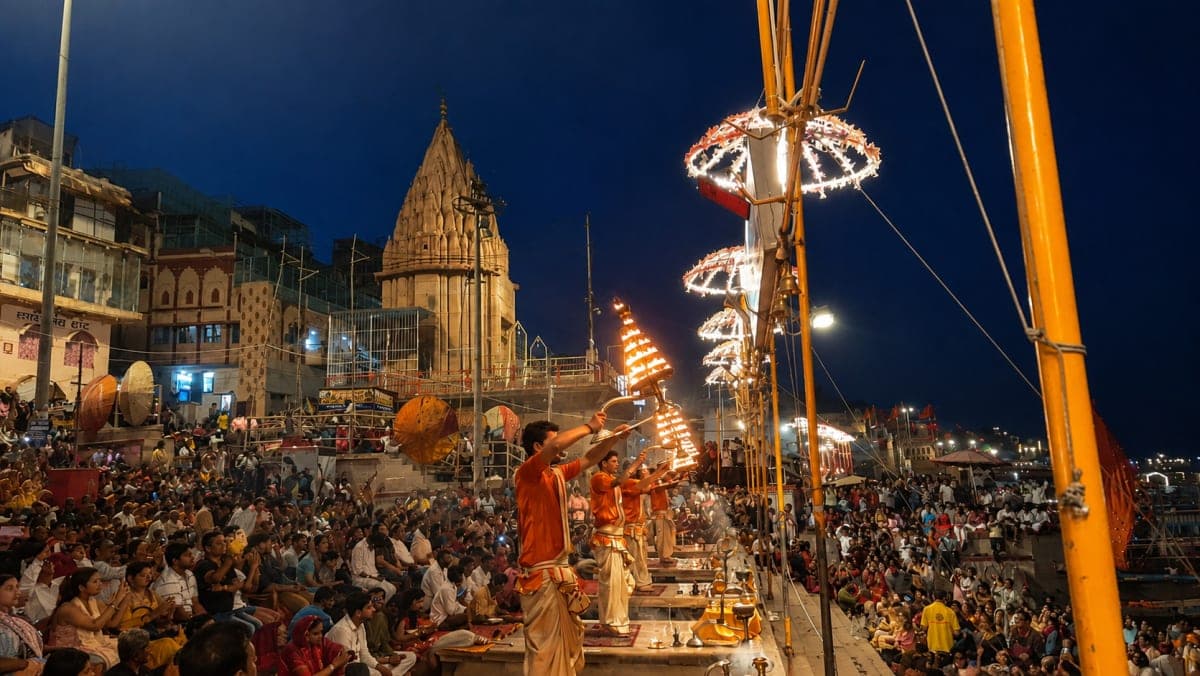
Every evening, as darkness falls over the Ganges, Dashashwamedh Ghat becomes the stage for one of the most powerful spiritual ceremonies on earth — the Ganga Aarti. Seven priests, dressed in saffron and white, stand on elevated platforms along the ghat steps. In perfect synchrony, they raise massive brass lamps called diyas, each holding a cluster of flames, and begin a ritual that has continued without interruption for centuries.
The aarti is an offering to the river goddess Ganga — a prayer of gratitude for the water that has sustained life along this valley for millennia. The ceremony combines fire, incense, conch shells, bells, and synchronized chanting. Thousands of pilgrims and visitors watch from the ghat steps, the riverbank, and from boats on the Ganges itself. The reflection of the flames on the dark river creates an image that stays with travellers for the rest of their lives.
Seven Priests
Seven head priests perform the aarti simultaneously in perfect coordination, representing the seven sacred rivers of India.
Brass Diyas
Large multi-tiered brass lamps with dozens of wicks are waved in circles — a purification ritual offered to Goddess Ganga.
Conch Shells & Bells
The sound of conch shells and temple bells begins the ceremony and is believed to clear the mind and invite divine presence.
View from the River
The best view of the Aarti is from a wooden boat on the Ganges — watching the fire ceremony from the water is unforgettable.
History
3,000 Years of Unbroken Tradition
Ancient — Before 1000 BCE
The Yajna of Lord Brahma
According to the Skanda Purana, Lord Brahma performed the ten horse sacrifice here to invite Lord Shiva back to Kashi. The ghat is consecrated as the most sacred spot on the Ganges.
1735 CE
Rebuilt by Peshwa Bajirao
The Maratha Peshwa Bajirao I reconstructed the ghat in its current stone form after centuries of use. The step structure visible today largely dates from this period.
1780s
Ahilyabai Holkar's Patronage
The great Maratha queen Ahilyabai Holkar, who rebuilt much of Varanasi including the Kashi Vishwanath Temple, extended her patronage to the ghats of Varanasi, including Dashashwamedh.
Modern Era
Ganga Seva Nidhi
The Ganga Seva Nidhi trust formalised and expanded the evening Ganga Aarti ceremony into the grand ritual it is today — one of the most photographed events in all of India.
Experiences
What to Do at Dashashwamedh Ghat
Sunrise Boat Ride
Begin your day before dawn on a wooden rowboat. Watch the city wake up as priests perform morning rituals, pilgrims bathe, and the sky slowly fills with golden light.
Morning Ritual Walk
Walk the lanes early morning and observe the ancient daily rituals — flower offerings, incense, sacred thread ceremonies, and the sound of temple bells across the ghats.
Evening Ganga Aarti
Witness the most spectacular fire ceremony in India. Book a boat for the best view, or sit on the ghat steps among thousands of pilgrims and travellers from around the world.
Floating Diya
Release a small clay lamp with flowers on the Ganges as an offering. This simple act, done at dusk, is one of the most moving moments a visitor can experience in Varanasi.
Chai at the Ghat
Sit at one of the small chai stalls on the ghat steps and watch the river flow. Nothing captures the spirit of Varanasi more than a clay cup of tea by the Ganges.