Manikarnika Ghat
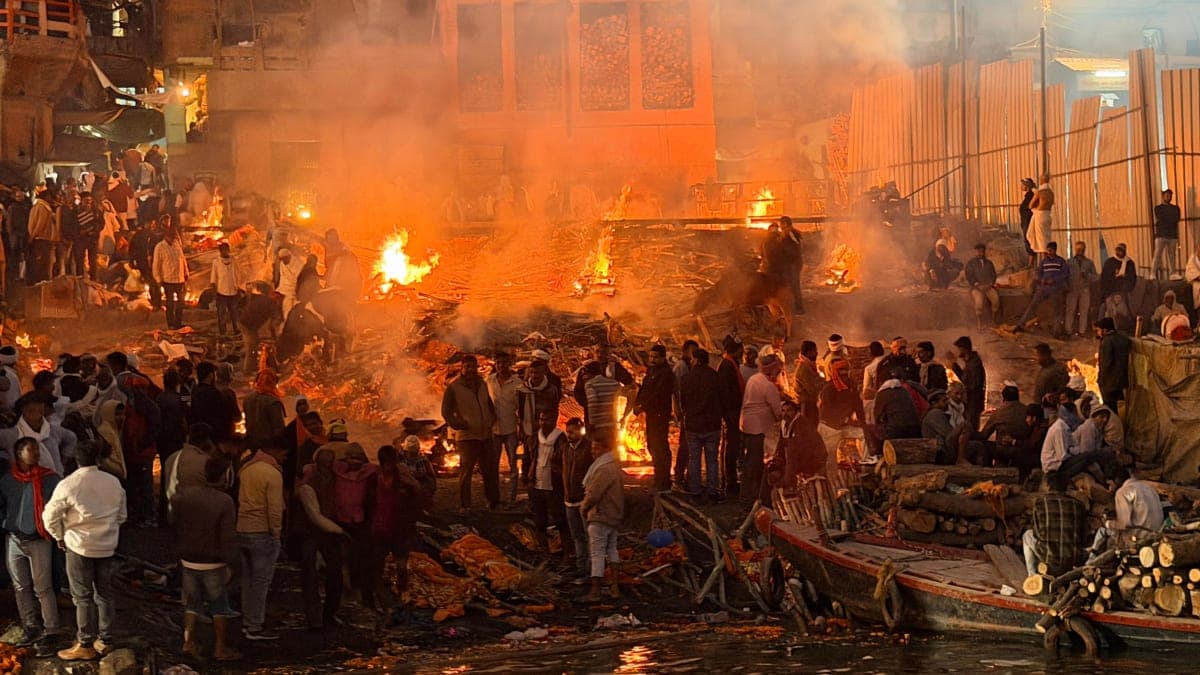
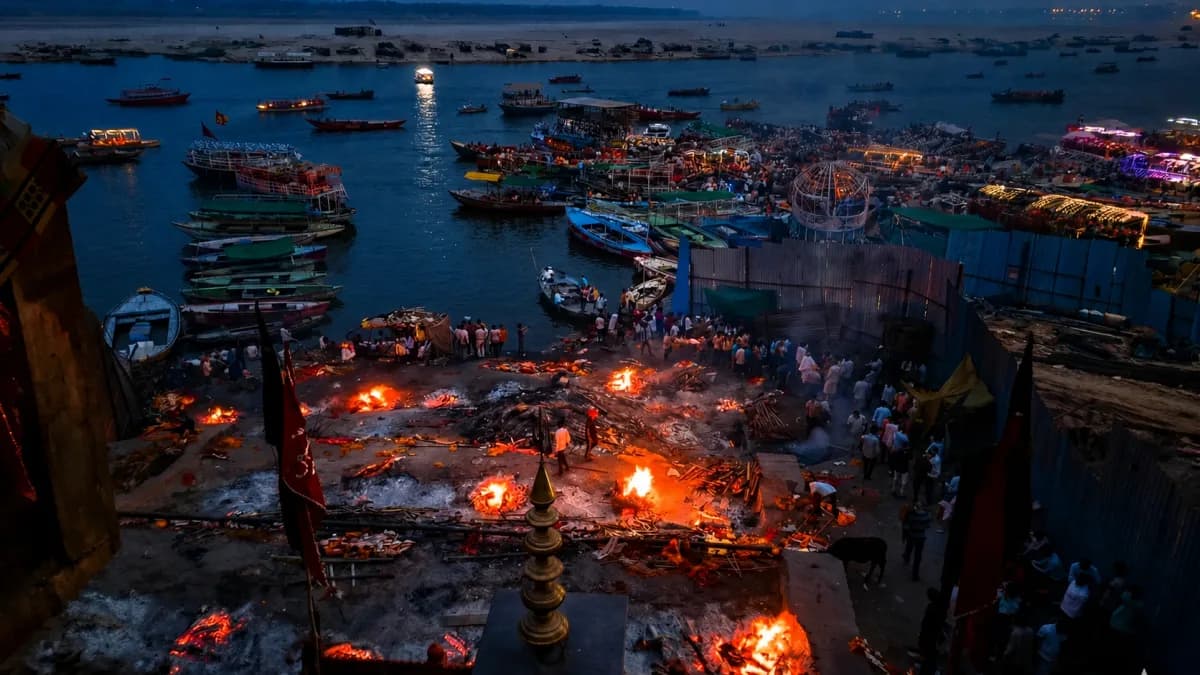
The eternal burning ghat — where funeral pyres have burned without pause for over 3,500 years, and where Hindus believe the soul is liberated from the cycle of rebirth.
Active Since
Over 3,500 Years
Cremations
100+ Daily
Fire
Never Extinguished
Entry
Free — Respectful
Photography
Not Permitted
The Sacred Story
Where the Earring of Sati Fell
Manikarnika Ghat carries one of the most profound stories in all of Hindu mythology. The name itself holds the key — "Mani" means jewel, and "Karnika" means earring. According to the Puranas, when Lord Shiva carried the body of his consort Sati across the universe in grief, Lord Vishnu used his Sudarshana Chakra to dismember her body. Her earring — her manikarnika — fell at this spot on the banks of the Ganges in Varanasi.
Because of this, Manikarnika is considered one of the 51 Shakti Peethas — the most powerful sacred sites of the goddess in all of India. And because Varanasi is the city of Lord Shiva, and Shiva himself is said to whisper the Taraka mantra into the ear of every dying person here, death at Manikarnika is not considered tragedy. It is considered liberation.
"At Manikarnika, death is not mourned — it is celebrated. The fire that burns here has never gone out. It does not consume — it liberates. To cremate a loved one here is the greatest final gift a Hindu family can give."
The cremation ground operates every hour of every day, every day of the year. There are no holidays at Manikarnika. Funeral processions arrive continuously, carrying bodies wrapped in white and gold cloth on bamboo stretchers, chanting "Ram naam satya hai" — the name of Ram is truth. Families from across India travel specifically to Varanasi so their loved ones can attain moksha here.
Gallery
The Ghat Through the Ages
Understanding the Ritual
The Sacred Cremation Ceremony
The cremation ceremony at Manikarnika follows an ancient and precise ritual that has remained essentially unchanged for thousands of years. The body is first bathed in the Ganges, then wrapped in white cloth for ordinary people, or in gold cloth for saints and senior members of the family. It is placed on a funeral pyre of specific woods — sandalwood for those who can afford it, mango and other sacred woods for others.
The Eternal Flame
The fire used to light each pyre is taken from the sacred flame that has burned continuously at Manikarnika for millennia. No match or lighter is used — only this ancestral fire.
The Dom Raja
The cremation ground is managed by the Dom community — an ancient caste whose hereditary role is to tend the sacred fire. The head of the family is called the Dom Raja.
Flowers and Ghee
Flowers, ghee, and sacred herbs are added to the pyre. The eldest son performs the final rites, circling the pyre and lighting it at the mouth — symbolising the release of the soul.
Moksha
Hindus believe that Lord Shiva himself whispers the Taraka mantra into the ear of every person who dies in Varanasi, granting moksha — liberation from the endless cycle of death and rebirth.
Visitor Guidelines
How to Visit Respectfully
Manikarnika Ghat is an active cremation ground, not a tourist attraction. Families are in genuine grief. The ceremonies taking place are deeply sacred. Visitors are welcome to observe from a respectful distance, but certain rules must be followed without exception.
No Photography
Photography and video recording are strictly prohibited at Manikarnika. This is enforced by the families and the Dom community. Respect this completely.
Speak Softly
Keep your voice low. Families are grieving. Do not make loud comments or point at the pyres. Observe in silence and with respect.
Dress Modestly
Cover your shoulders and legs. Remove your shoes before stepping onto the ghat steps near the cremation area.
Decline Unsolicited Guides
Many touts approach tourists near Manikarnika offering to show them inside or explain the rituals in exchange for money. It is best to come with a licensed local guide you have arranged beforehand.