Things to Do in Varanasi: 15 Best Experiences & Hidden Gems
15 best things to do in Varanasi: sunrise boat ride, Ganga Aarti, Manikarnika's eternal fire, Sarnath and hidden stories most visitors miss.
The American writer Mark Twain once wrote that Benares is older than history, older than tradition, older even than legend. Anyone who has walked its lanes at dawn knows what he meant. Varanasi is not a city you tick off a list. It is a city that happens to you.
I am a licensed local guide in Varanasi, and this is the list I give my own guests: the famous places everyone should see, and the quiet stories that most visitors walk past without knowing. Some of these are on every travel website. Others you will only hear about from someone who walks these ghats every week.
In a hurry? The top 5
- Sunrise boat ride on the Ganga
- Evening Boat ride and Ganga Aarti at Dashashwamedh Ghat
- Manikarnika Ghat, where the fire is said to never go out
- A walk through the old city lanes
- Sarnath, where the Buddha gave his first sermon
15 Best Things to Do in Varanasi
1. Take a sunrise boat ride on the Ganga
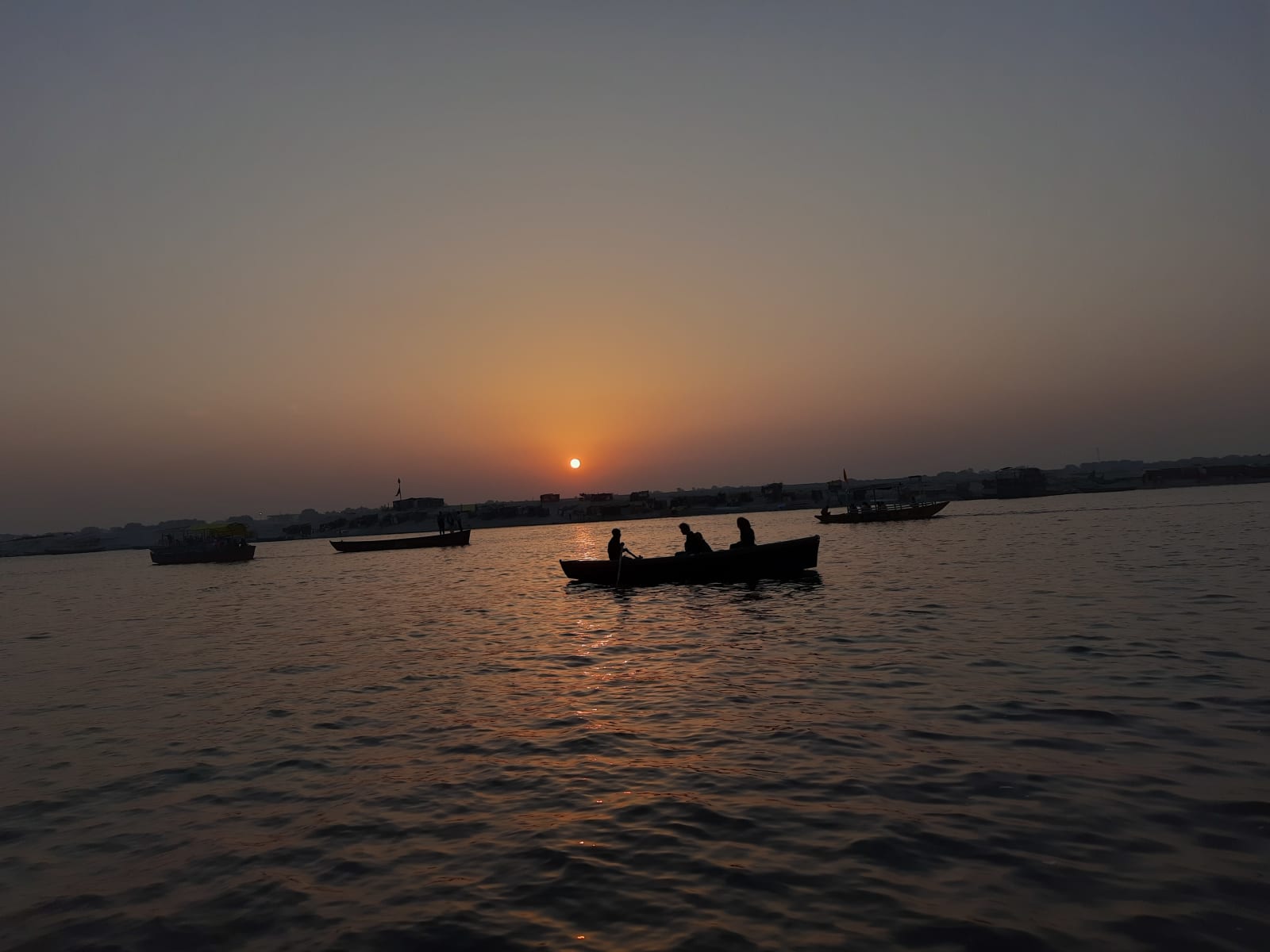
If you do only one thing in Varanasi, do this. Before the city is fully awake, the river turns the colour of copper, and the ghats begin to fill with people bathing, praying and doing yoga. From the water you see the whole skyline of temples, palaces and stone steps stretching for several kilometres along the western bank.
Go early, because the light and the calm are gone within a couple of hours. Agree the price and the route before you step into the boat, and ask your guide to row you slowly past the main ghats instead of rushing to the far end and back. You can read more about my sunrise boat ride.
2. Watch the Ganga Aarti at Dashashwamedh Ghat
Every evening, shortly after sunset, young priests stand on raised platforms at Dashashwamedh Ghat and worship the river with fire. Huge brass lamps rise and fall in rhythm, conch shells sound, bells ring and thousands of people watch from the steps and from boats on the water.
Local belief says Lord Brahma performed ten horse sacrifices here, which is how the ghat got its name. Because the start time follows sunset, it changes through the year, so confirm the time on the day. Arrive early for a good place, or watch from a boat, which gives you a view of the whole ceremony without the crowd pressing on you. Our Ganga Aarti tour includes a good spot, and you can learn about the ghat on its Dashashwamedh Ghat page.
3. Manikarnika Ghat: the fire that never goes out
This is the place that surprises people the most. Manikarnika is the main cremation ghat of Varanasi, and the pyres here burn day and night, all year round. Locals say the fire has not been allowed to die for thousands of years. I cannot prove that, and no guide can, but you can stand there at any hour and see for yourself that the flames never stop.
The name means "jewelled earring". One legend says an earring of Goddess Parvati fell here. Another says this is the spot where Lord Shiva whispers the liberating mantra into the ear of the dying, so that a soul cremated in Kashi is freed from the cycle of rebirth. That belief is the reason families have carried their dead to this city for centuries.
The ghat is run by a community called the Dom, who have kept the sacred fire for generations. You will see huge stacks of wood being weighed, and you may notice that nobody here is hurried or loud. Death in Varanasi is not hidden away. It is part of the city's daily life, and many visitors tell me it changed how they think about it.
This is a place of grief, so please be respectful. Do not take photographs of the cremations, keep your voice low and ask your guide where to stand. Read more on the Manikarnika Ghat page.
4. Get lost in the old city lanes
Behind the ghats is a maze of narrow lanes, some barely wide enough for two people. Inside it you find tiny shrines set into walls, sweet shops that have run for generations, weavers' workshops, old havelis with carved doors and courtyards, and cows who clearly own the place.
It is very easy to get lost here, and that is exactly why a local guide makes the walk better. A guide shows you the doorways with stories behind them, the shops where locals eat and the shortcuts that tourists never find. Try our heritage walk or the free ghat walking tour to see it with someone who knows the way.
5. Visit Kashi Vishwanath Temple and the Corridor
Kashi Vishwanath is among the most sacred Shiva temples in India and one of the twelve Jyotirlingas. The temple's golden spire was gilded in the early nineteenth century. In 2021 the Kashi Vishwanath Corridor opened, a wide pedestrian path that connects the temple directly to the river, so you can now walk from the Ganga to the temple without squeezing through the old lanes.
Security rules are strict. Mobile phones, bags and some other items are usually not allowed inside, and queues can be long on Mondays, festivals and holidays. Check the current rules before you go, and dress modestly.
6. Spend a morning at Assi Ghat
Assi Ghat sits at the southern end of the riverfront and feels calmer than the central ghats. Students, musicians, yoga teachers and pilgrims all share the steps. In the early morning there is a cultural programme with music and prayers, known as Subah-e-Banaras, and it is a gentler way to see the river than the evening crowds.
Many travellers stay near Assi because of the cafes, and it is also the starting point for our Dev Deepawali boat rides. More details on the Assi Ghat page.
7. Take a half-day trip to Sarnath
About 10 km from the city centre, Sarnath is the place where the Buddha gave his first sermon after enlightenment, to five ascetics who became his first disciples. The huge Dhamek Stupa, the ruins of old monasteries and a peaceful park make it one of the most important Buddhist sites in the world.
Do not skip the museum. It holds the Lion Capital of Ashoka, the sculpture that became India's national emblem. It is quiet, green and a complete contrast to the noise of Varanasi, which is why many guests tell me it is their favourite part of the trip. See our Sarnath Buddhist tour.
8. See the leaning temple of Ratneshwar Mahadev
Near Manikarnika Ghat stands a small stone temple that leans at a strange angle, and during the monsoon its base is covered by the rising river. Locals call it the Kashi Karvat, the "tilted temple of Kashi". The story people tell is about a son who wanted to repay his mother's debt and built this temple, and a curse that made it tilt.
Whatever the truth, it is one of the most photographed spots on the river, and most visitors pass it from the boat without knowing the story. Ask your guide to tell it as you float by.
9. Eat your way through the old city
Banarasi food is its own world, and almost all of it is vegetarian. Start the morning with hot kachori and sabzi followed by fresh jalebi. Try tamatar chaat, thick lassi served in clay cups, and Banarasi paan after dinner. In winter, look for malaiyo, a light, foamy milk sweet that appears only in the cold months and is made in the early morning.
Eat where the locals queue and where the food is cooked fresh in front of you, and carry bottled water. A guide can take you to places no map shows.
10. Cross the river to Ramnagar Fort
On the eastern bank, opposite the ghats, stands the eighteenth-century Ramnagar Fort, home of the former royal family of Kashi. Inside is a museum with old carriages, weapons and royal belongings. The town is also famous for Ramnagar Ramlila, a month-long theatre performance of the Ramayana that is recognised by UNESCO as part of India's living heritage.
Crossing the river and looking back at the skyline of Varanasi at sunset is a view most visitors never see.
11. Hear the story of Harishchandra Ghat
Varanasi has a second cremation ghat, named after King Harishchandra, who in an old legend lost his kingdom, his family and his wealth because he refused to break his word. The story says he ended up working at the cremation ground. Every Indian child hears this tale, and Harishchandra has become a symbol of truth.
The ghat is quieter and more local than Manikarnika. It is also where the unusual Masan Holi is celebrated around the festival of colours, a custom that locals take pride in and visitors find hard to believe.
12. Visit the Bharat Mata Temple
Most people do not know about this one. On the campus of the Mahatma Gandhi Kashi Vidyapith stands a temple with no idol. Instead there is a large marble relief map of undivided India, with mountains, rivers and plains carved in stone. It was opened in 1936 and Mahatma Gandhi is said to have inaugurated it. It is a peaceful stop for anyone who likes history.
13. Follow the poets and saints
Varanasi has always attracted poets. Kabir, the weaver and mystic who wrote simple verses against hypocrisy, is closely tied to the city. Tulsidas is traditionally believed to have composed the Ramcharitmanas here, and Tulsi Ghat and the Sankat Mochan Hanuman temple are linked to his memory. A guide who knows the verses can bring these places to life in a way that signboards cannot.
14. Watch Banarasi silk being woven
Banarasi sarees are famous across India, and many are still woven by hand on old looms in the weaver neighbourhoods of the old city. Spending time in a workshop, watching a pattern slowly appear thread by thread, is an experience in itself. You can buy directly from the weavers, but ask your guide to take you to honest workshops rather than commission shops.
15. Escape to a village near Varanasi
Beyond the crowded ghats, the countryside around Varanasi is green, calm and welcoming. A village tour shows you farms, small temples, ponds and the daily life of people who have never needed a tourist map. It is a good way to rest in the middle of a busy trip. Read about our village tour.
Bonus: Dev Deepawali, the Diwali of the Gods
If you can plan your trip around Kartik Purnima, you will see the ghats lit with thousands of lamps. It is the most beautiful night of the year in Varanasi. Read our guide to Dev Deepawali.
A few lines for the river
The Ganga passes the burning ground,
and nothing here is hurried.
The flame does not ask who you were,
the river does not ask where you are going.
Bells wake the dark, the lamps float out,
a thousand small lights leaving.
Come as a visitor, stay as a listener.
Kashi speaks to those who are quiet.
Best time to visit Varanasi
The most comfortable months are October to March, when the days are mild and the evenings are cool. Summers are very hot, and in the monsoon the river rises, covers parts of the ghats and sometimes limits boat rides. Winter mornings can bring fog and a late sunrise. I have written a full guide to the best time to visit Varanasi.
How many days do you need?
Two full days is a good plan for most travellers. Day one: sunrise boat ride, old city walk and the evening Ganga Aarti. Day two: Sarnath in the morning, then temples and food in the afternoon. With only one day you can still see the essentials, but you will be rushing. If you have three days, add Ramnagar Fort, a weaving workshop and a village visit.
Tips from a local guide
- Agree prices first. For boats, rickshaws and shops, settle the price before you start.
- Use a licensed guide. A real guide carries an official identity card. Be careful with strangers who offer a "free" tour and then take you to shops.
- Dress modestly. Cover your shoulders and knees at temples, and carry socks, because floors can be hot or wet.
- Watch your step. Lanes are crowded and uneven, with cows, scooters and steps everywhere.
- Respect the cremation ghats. No photographs, no loud talk and no pointing.
- Drink bottled water and eat at busy, fresh places.
- Go slowly. Varanasi rewards patience. Do fewer things and stay longer in each.
Frequently asked questions
What is the best thing to do in Varanasi?
A sunrise boat ride on the Ganga is the experience most visitors remember. Pair it with the evening Ganga Aarti for the two most important sights in one day.
Is Varanasi safe for tourists?
Yes, millions of visitors come every year. The main problems are crowds, touts and overcharging rather than serious crime. Use licensed guides, agree prices in advance, and take normal care of your belongings.
Why does the fire never stop at Manikarnika Ghat?
Cremations are held here day and night, because it is believed that being cremated in Kashi brings liberation. Locals say the sacred fire has been kept burning for thousands of years, though this is a tradition and not something that can be proved.
Do I need a guide in Varanasi?
You can visit alone, but the old lanes, the cremation ghats and the temples are much easier to understand with someone who knows the stories and the etiquette. A guide also saves you from tourist traps.
How many days are enough for Varanasi?
Two days cover the highlights comfortably, including Sarnath. Three days let you add Ramnagar Fort, food trails and a village visit.
Explore Varanasi with a local guide
I would be happy to show you my city. Choose a private or small-group experience:
- Sunrise Boat Ride
- Ganga Aarti Tour
- Heritage Walk
- Sarnath Buddhist Tour
- Varanasi Full Day Tour
- Free Ghat Walking Tour
Message me on WhatsApp at +91 9565194075 and tell me your dates. I will suggest the best plan for you.